.png)
The Not So Wildwood
Updated: Mar 22
Today is The International Day of Forests. To celebrate it, this article delves into the intertwined story of woodlands and ourselves in Britain and how that story must be continued for their survival.
In the past there has been a notion that Britain would have at one stage been covered from head to toe in forest. This forest was known as the Wildwood and was thought to have sprung up after the last ice age during a period of climatic stability known as the Atlantic Period (7300 to 4500 BC).
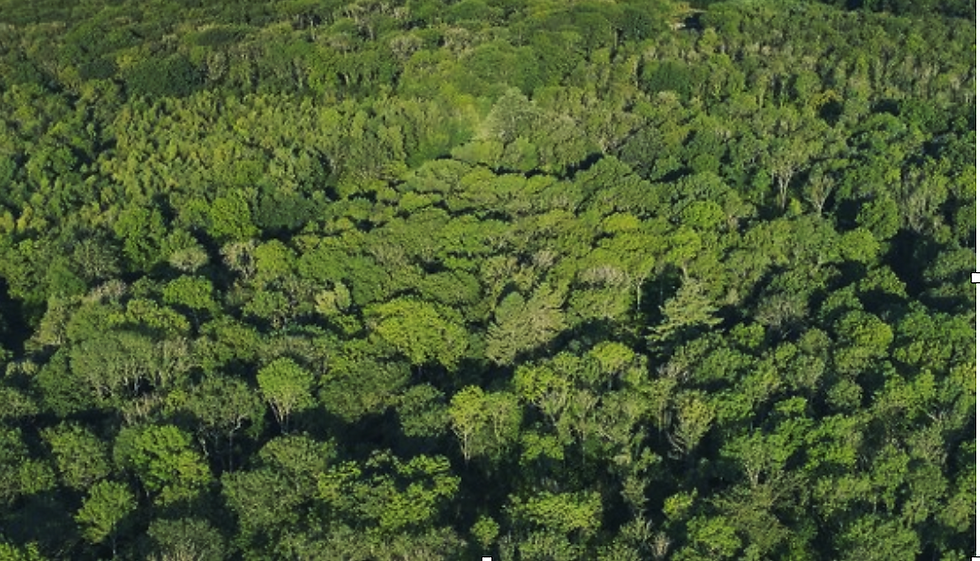
This idea comes from Ecological Succession, which is the broad principle that any land in Britain if left to fallow, will slowly transition into woodland, first with scrub, then pioneer species like Birch and later climax species such as Beech which need the shade of other trees to germinate.

However, more recently the idea of what this Wildwood or “natural state” would have looked like has been challenged through the work of Isabella Tree at The Knepp Estate and others. They have added grazing animals into the mix and into the idea of the Wildwood.

Instead of the Wildwood being blanket forest, it would have more likely been a dance between the woodland establishing in ungrazed areas (where predators moved grazers on) or areas protected by thorny scrub and between the areas of open ground created through the romping of the Elephants, Megafauna and the other grazers of old that inhabited mainland Europe and later post-glacial Britain.
Many trees co-evolved with this behaviour. It is why many deciduous trees coppice (where they can be cut at their base and new shoots will emerge). This was a survival mechanism for the trees but it also became a way for them to live for longer by shedding off their decaying wood, rejuvenating them. Hazel for example lives for about 80 years on its own but through coppicing, they can live for 300 years.

This mixture between areas of woodland in different stages of growth and succession, and areas of open ground creates a mosaic, a mixture of different habitats mixed together. This in turn creates lots of edges and in turn lots of abundance. This is due to a principle in nature known as Edge Effect Abundance where the more edges there are between ecosystems within a space, the more opportunities and niches there are for a greater variety of species. It is why we as humans congregate around the coast and why sea life does too. Hedges, edges around pounds and the edges between woodlands and pasture are all super important for biodiversity. The more edges there are the more biodiversity there will be.

By adding grazing animals into the idea of the Wildwood and now into the myriad wilding schemes that have been created off the back of The Knepp Estate, a more “natural” state for Britain can be formed.
But is it “natural” for humans to be excluded from these ideas and processes? Should “nature” be left to do its thing without us in the picture?
A study was undertaken for what previous Wildwoods would have looked like in the last Interglacial period (129,000–116,000 years ago) before our ancestors are linked with changing the landscape around them significantly. At this time all of the world’s current species would have been present and at their current stages of evolution.
96 pollen records were used to create the paleo-artistic reconstructions below which give us a potential view of what a “natural” state may have looked like and one which supports the idea of the Wildwood now put forward by The Knepp Estate.

However, the last ice age dramatically changed the landscape of Europe and that of Britain. Britain had become desolate tundra and the Wildwoods had shifted southwards.

Following the ice age (12,000 BC), most of Britain would have been bare of trees. “Birch and willow scrub possibly persisted along the lower margins of the ice, with pine in places. Relicts of pre-glacial flora may have survived in sheltered bays along the western coasts … Tundra and moorland followed the retreating ice, and then waves of colonisation by different tree species spread from the south. The first were birch, aspen and sallow, and then about 8500 BC pine and hazel spread north, replacing birch which became uncommon for several thousand years. Oak and alder followed the pine, then lime, elm, holly, ash, beech, hornbeam and maple in succession spread northwards”. This Wildwood then stabilised during The Atlantic Period (7300 to 4500 BC) (Wimborne History Trail).
However as Studholme (2024, p. 47) (a past Forestry Commission Chair) rightly has put, “We can move seeds and saplings in a day, over distances that trees might take hundreds or thousands of years to travel.”
Whilst it’s possible that the Wildwood moved from Southern France and Spain without our assistance, it is likely that our ancestors had at least some involvement in its migration northwards. Because as the ice retreated northwards our ancestors followed and it seems that the Wildwood followed at a similar rate.

“These islands had been tundra and ice for tens of millennia, when a few hardy nomadic hunters chased migrating herds of reindeer to take advantage of a summer flush of grass, as the Holocene began 12,000 years ago… These hunters were followed by pioneer trees, resilient Scots Pine and light-seeded Birch. The forest was, from its beginning entangled in human lives” (Studholme 2024, p.45-46).
It is likely that the early Birch and Scots Pine seeds were entrapped in the Reindeer’s hooves and fur and through our ancestors’ driving them into Britain the rate at which the Wildwood returned may have increased.
“In time other species came to displace the Pines and Birch. Some blowing in on the wind, others hitching lifts with birds and animals”. Though others such as “species with heavy, edible seeds like Oak and Hazel may well have been brought by Mesolithic women. Long shelf-life foods like acorns and cob nuts were always critical to feed families”. Thus, “the flora and fauna of ancient woodland are a consequence of millennia of human management. People arrived here before the trees” (Studholme 2024, p.45-46).
It is known that our ancestors have coppiced trees since neolithic times mimicking the great megafauna of old. Carbon dating of the Sweet Track found in the Somerset Levels, confirms that it goes back to at least 3807 BC. But what’s to say it doesn’t go back further than this. What’s to say they didn’t harvest poles for hafting tools or for use as firewood, returning to sites in following seasons on their migratory routes. And what’s to say this did not coincide perfectly with the migration of the Oak, Hazel, Alder, Lime, Elm, Holly, Ash, Beech, Hornbeam and Maple. All of which are commonly coppiced to this day.

In more recent history many of our “natural and pristine” temperate rainforests were managed as Oak coppice, where the wood was used to make charcoal and the bark was harvested in the summer for tanning leather. The temperate rainforests on Exmoor for example are largely exclusively Oak woodlands which is an indicator of this. “The dominance of Oak and limited occurrence of Rowan, Hazel, Birch, Holly and Aspen in an upland oakwood is due to Oak being favoured in the past for the production of tan bark and charcoal” (Forest Research 2020, p.53). In the case of Horner Woods there is archaeological evidence of a medieval iron working village.

Following the decline of the charcoal industry after the introduction of coal and due to the mass migration of landworkers into cities and their factories, many of these woodlands became derelict, the Oaks grew tall and we now have many of our temperate rainforests as a result.
Though now, many of our woodlands are at risk including our temperate rainforests. For many of them are unfenced and are connected to areas of grazing. As a result, there is little to no natural regen (self-sown trees) underneath that are ready to form the next canopy once the trees in the canopy start to die. Without any human intervention, it is likely that when the current trees in the canopy die, that the woodlands will quickly transition to endless acres of Bracken just as others did centuries ago. This is because trees take a long time to regenerate. Scots Pine take 4 to 10 years, Fir and Spruce 20 to 30 years, Oak 25 years+ and Beech 20 to 60 years. As a result, unless areas are fenced off for temporary periods or livestock removed and deer culled and trees planted to speed up regen then the natural regen is unlikely to survive and many of our woodlands will unlikely have a future.
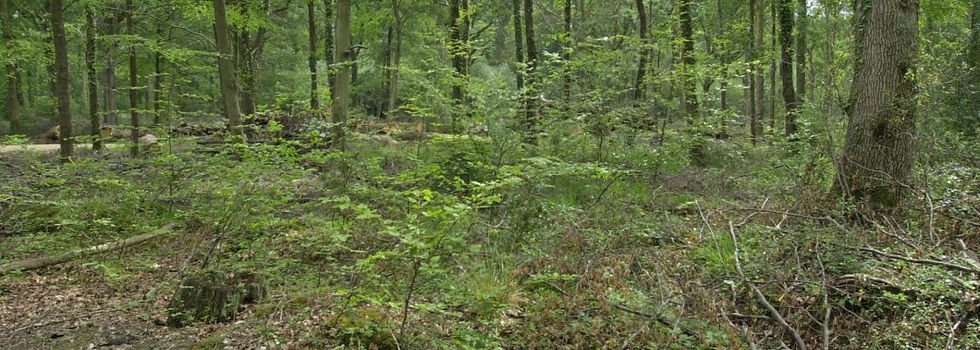
So just as our temperate rainforests are not as pristine and natural as they seem, perhaps too the Wildwoods were not so “wild”. And perhaps through this new lens we can start to accept that we belong in woodlands and that without our management of regen and grazing pressures (in the place of the predators of old) we may no longer have woodlands and that Britain may in turn return to tundra and a somewhat prehistoric and apocalyptic looking land.
References
Forest Research, 2020. Managing Native
Broadleaved Woodland. Edinburgh: Forest Research. Available from: Managing Native Broadleaved Woodland - Forest Research
Studholme, H., 2024. Rooting the Future Forest. Banbury: RFS. Available from: https://rfs.org.uk/wp-content/uploads/2025/01/Studholme-Jan-2025-QJF.pdf
Wimborne History Trail. A brief history of woodlands in Britain. Wimborne: Wimborne History Trail. Available from: https://www.wimbornehistorytrail.uk/easyread/history_woodlands_britain-vf.pdf


Comments